Basement Floor Epoxy Boise: A Bright, Dry, Usable Room Downstairs
Most Boise basements go from bare slab to finished floor in a couple of days.
There is a whole room under your house doing nothing but holding boxes. A couple of days of work turns that cold, dusty slab into a bright, dry floor you can put a gym, a playroom, or a workshop on.
Boise Epoxy Pros specializes in basement epoxy flooring in Boise, ID and the surrounding Treasure Valley. We install moisture-resistant basement floor coatings for homes in Boise, Meridian, Nampa, Eagle, Kuna, and Caldwell, using systems built for Idaho's climate and concrete.
Why Boise Homeowners Coat Their Basement Floors
If your Boise basement smells musty, kicks up dust, or feels too unfinished to use, the problem usually starts with the bare concrete floor. Most basements in the Boise area are finished above and forgotten below. The concrete slab sits bare, collecting dust, absorbing moisture, and turning the space into a storage area you walk through as fast as possible. That changes the moment an epoxy coating goes down. The floor becomes bright, clean, and usable. A space that was wasted square footage becomes one of the most functional rooms in the house.
Boise homeowners coat their basement floors for four main reasons:
- Moisture control. Seal the porous concrete so it stops soaking up and releasing moisture.
- Dust elimination. Stop concrete dust from settling on stored items and cycling through your HVAC.
- Aesthetics. Turn a gray, dingy slab into a bright, finished-looking floor.
- Resale value. Show buyers clean, usable square footage instead of a dark storage space.
An uncoated concrete floor is porous, which means it absorbs and releases moisture constantly. It also generates concrete dust that settles on everything stored down there. A properly installed epoxy system seals the slab, stops the dust, and creates a surface that is as easy to clean as a kitchen floor.
From a resale standpoint, a finished epoxy basement floor tells buyers the space is usable and cared for. Even without drywall or a drop ceiling, a clean, bright floor turns "unfinished basement" into square footage a buyer can picture living in, and that difference shows at showings.
Idaho Climate and Why Moisture Management Matters
Boise sits in a high desert climate, but that does not mean basement moisture is not a concern. Spring snowmelt from the Boise foothills creates hydrostatic pressure against foundation walls and slabs in many neighborhoods. Homes in lower-lying areas near the Boise River and in parts of Meridian and Nampa also see seasonal groundwater fluctuations that push moisture up through concrete slabs.
Moisture in a concrete slab matters because moisture vapor moving up through the concrete is a leading cause of epoxy delamination and bubbling. When a slab's moisture vapor emission is above acceptable thresholds, a vapor barrier primer formulated to block moisture transmission should go down before the epoxy layers. Applying standard epoxy directly to a wet slab is what causes peeling and bubbling within a year.
If you are worried about basement moisture or past leaks:
- Moisture is a key factor in whether an epoxy floor lasts, even when it is not obvious.
- On slabs with elevated moisture, a vapor barrier primer goes down before any epoxy.
- Standard epoxy applied directly to a wet slab is what causes peeling and bubbling within a year.
The Before-and-After Transformation
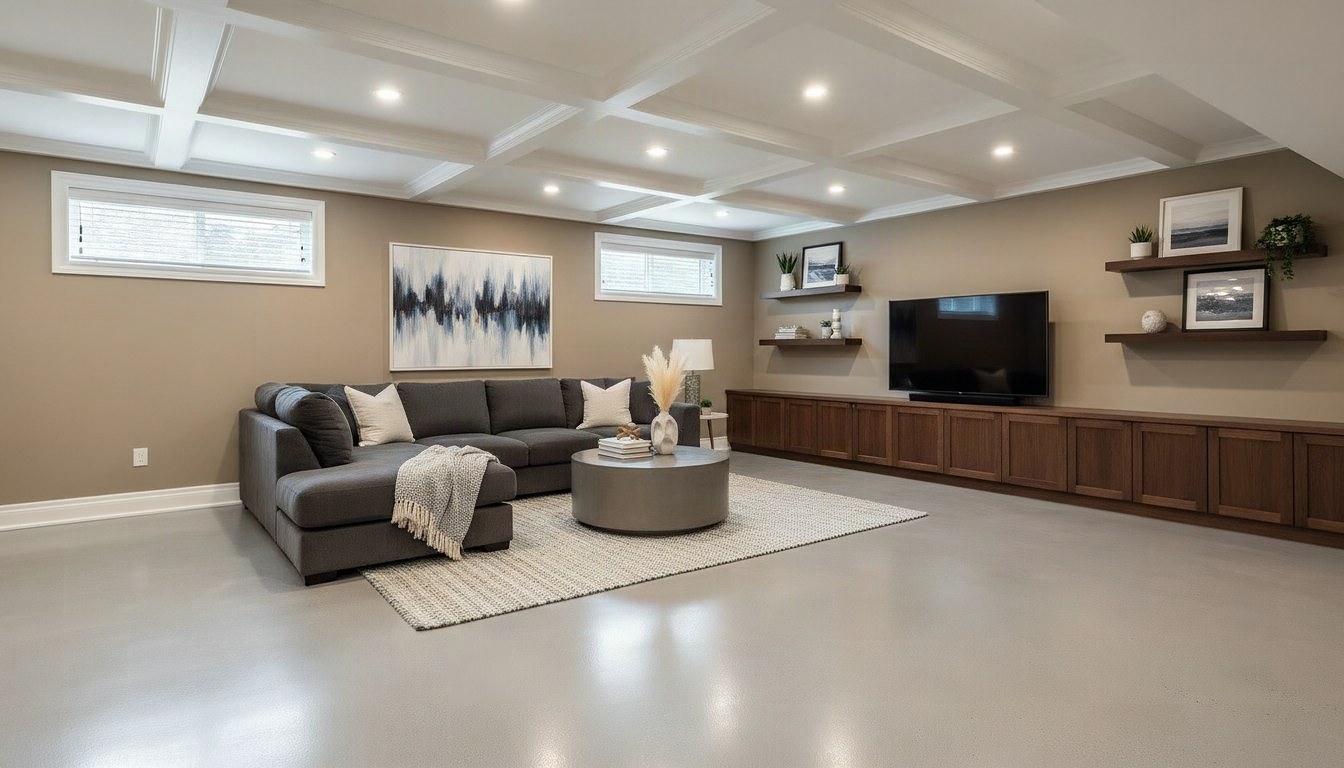
The most common feedback we hear from Boise homeowners after a basement epoxy install is that they wish they had done it sooner. A bare concrete basement with a few cracks, some old paint, and years of grime gets ground down, patched, primed, and coated in a couple of days. When the crew leaves, the space looks completely different. Bright, clean, and reflective. Homeowners who had been using the basement for storage only start setting it up as a home gym, a workshop, a playroom, or a finished living area almost immediately.
The transformation is not just visual. The coated floor no longer generates concrete dust, so the HVAC system stops cycling particulates through the house. Items stored on the floor stay cleaner. Spills wipe up in seconds. The space feels warmer and more inviting even before any other finishing work is done.
Basement Epoxy Flooring Pricing in Boise
Basement epoxy flooring in Boise pricing depends on square footage, current floor condition, the amount of crack patching and prep required, and the finish system you choose. A solid-color single-coat system with a clear topcoat comes in at the lower end. A decorative flake or metallic system with multiple coats and a premium topcoat lands higher. We give you an estimate so you can see exactly what drives the number.
Carpet installation in a basement requires a moisture barrier pad, and basement carpet is prone to retaining moisture and developing odor over time regardless of the pad used. Tile typically costs more per square foot installed. Epoxy delivers a more durable, moisture-resistant surface at a competitive price point, with far lower long-term maintenance costs.
If you tell us your approximate square footage, we can usually give you a ballpark range over the phone before the crew arrives.
Epoxy vs. Carpet vs. Tile in a Boise Basement
Here is how a coated epoxy floor compares to the two most common basement flooring choices, side by side:
In most Boise basements, epoxy gives you a cleaner, more durable, and more flood-resistant floor for a similar or lower lifetime cost than carpet or tile.
Ready for an estimate on your basement?
Call (208) 285-7685 and describe your slab, and you get a straight answer on what it takes.
Call (208) 285-7685Free estimate over the phone, no phone treeWhat You Can Do With an Epoxy Basement
Home gym: Epoxy handles rubber flooring mats, dropped weights, and heavy equipment without cracking or staining. Many homeowners lay interlocking rubber tiles over the epoxy in the lifting zone and leave the rest of the floor coated.
Workshop: The chemical resistance of epoxy stands up to oils, solvents, stains, and the general abuse that a workshop floor takes. Safety striping can be added to mark equipment zones and walkways.
Home office or playroom: A bright, clean epoxy floor with a decorative flake finish makes a basement feel like a real room rather than a utility space. Area rugs lay flat on the smooth surface and add warmth without the mold risk of wall-to-wall carpet.
Man cave or entertainment space: Epoxy holds up to foot traffic, spills, and the weight of furniture and large screen setups. It cleans easily after parties and does not trap odors the way carpet does.
The Concrete Prep Process
The quality of a basement epoxy job is determined almost entirely by the quality of the surface preparation. We use diamond grinding equipment to profile the concrete surface, which opens the pores and gives the epoxy a mechanical key so it grinds into the slab instead of just sitting on top. We vacuum the grinding dust with industrial equipment, patch cracks and divots with the right filler, and let repairs cure fully before any epoxy goes down. This prep is the most labor-intensive part of the job. It is also the part that decides whether your floor lasts three years or thirty. Plenty of low-bid installers skip or rush this step. We do not. Prep is where we spend most of our time on your project.
What to Expect: Your Basement Epoxy Project, Step by Step
- Free estimate over the phone. We measure the space, check the slab and any cracks, and talk through how you want to use the basement.
- Estimate. You get a clear price with finish options and a detailed schedule. No obligation, no pressure.
- Surface preparation. Diamond grinding, crack and divot repair, and vapor barrier primer if your moisture readings call for it.
- Base coat and color layer. The color or flake layer goes down over the prepped, primed slab.
- Topcoat application. A protective topcoat with built-in slip resistance seals the system.
- Back to use. Light foot traffic allowed after topcoat cures. Furniture and equipment can be moved back once the floor has reached full cure.
Finish Options for Basement Floors
Solid colors are the most straightforward option. A single color across the entire floor gives a clean, uniform look. Popular choices for basements include light gray, dark charcoal, tan, and white. Solid finishes show detail and craftsmanship clearly, so they work best when the floor prep is thorough.
Flake and chip systems broadcast colored vinyl flake into the epoxy while it is still wet. The flake adds visual texture, hides minor surface imperfections, and provides a natural-looking variation in the floor. Flake systems are also naturally more slip-resistant than smooth systems. This is the most popular option for basement floors in Boise because it balances durability, appearance, and practicality.
Metallic epoxy creates a high-gloss, three-dimensional effect with swirling patterns of pearl pigment suspended in the clear epoxy system. Metallic floors are visually striking and unique. No two installations look exactly the same. They are a popular choice for homeowners who want a basement that looks finished and impressive rather than just functional.
Why Epoxy Beats Carpet in a Basement
Basement carpet is prone to retaining moisture through the humidity swings that come with Idaho seasons. Even with moisture barrier pads, basement carpet tends to develop musty odors over time, and those odors are hard to fully kill once they take hold. Epoxy is highly moisture-resistant, resists mold growth, and cleans up with a mop and neutral cleaner in minutes. If a basement floods, an epoxy floor survives intact. Carpet has to be torn out and replaced. For basements in Boise where moisture is a seasonal reality, epoxy is the practical choice.
Basement Epoxy Flooring Across the Treasure Valley
We install basement epoxy flooring for homeowners throughout Boise, Meridian, Nampa, Eagle, Kuna, and Caldwell, from the North End and the Bench to West Boise and older homes near the Boise River. If your basement floor needs attention, one call gets a free site visit on the calendar and an estimate in your hands once the crew has seen the space. Tell us your approximate square footage and we can usually give you a ballpark range over the phone before we even come out.
Is Epoxy Right for My Boise Basement?
Epoxy is usually a great fit if:
- You have a concrete basement floor anywhere in the Boise area.
- You have noticed dust, musty smells, or minor moisture issues.
- You want to use the space as a gym, playroom, office, or storage without worrying about spills.
On your free estimate call, we talk through the slab's condition and any structural issues. If epoxy is not the right fit for your slab, we will tell you, and explain why. We would rather lose the job than coat a floor that is going to fail.
Ready to use your basement for more than storage?
Call the crew. They come to your Boise-area home, look at the basement slab, walk you through finish options and timeline in person, and give you a detailed estimate with zero obligation. Most Boise homeowners are surprised by how affordable a quality basement epoxy floor is compared to carpet when you factor in moisture barriers and replacement costs after floods.
A finished basement floor
Get Your Free Basement Epoxy Flooring Estimate
Get your free, no-obligation estimate
Call (208) 285-7685 and describe your floor. You get a straight answer on what it takes, no form, no waiting.
Call (208) 285-7685Free estimate over the phone, no phone tree See your price30-second calculator on the home pageNo obligation.
Basement Epoxy Flooring FAQ
1. How much does basement epoxy flooring cost in Boise?
Basement epoxy cost scales with square footage, floor condition, and the finish system you choose; national cost guides such as HomeGuide and Angi put typical epoxy flooring at roughly $3 to $12 per square foot installed. A solid-color single-coat system with a clear topcoat comes in at the lower end of that range, while a decorative flake or metallic system with multiple layers lands higher. We provide an estimate after a free estimate call so you know exactly what you are paying for before any work begins.
2. Can epoxy be applied to a basement with moisture problems?
Yes, but the moisture issue must be properly addressed before the epoxy goes down. On slabs with elevated moisture, a vapor barrier primer formulated to block moisture transmission through concrete is applied before any coating. Applying standard epoxy over a wet slab without this step causes delamination and bubbling. If you already know your basement has moisture issues or past water intrusion, mention it when you call so we can discuss the right primer options for your estimate visit.
3. What is the best epoxy for a basement floor?
For most Boise basements, a high-solids epoxy base coat with a broadcast flake layer and a polyaspartic or polyurethane topcoat is the ideal system. The flake provides visual interest and natural slip resistance, and the topcoat protects the system from UV yellowing and surface abrasion. For basements used as home gyms or workshops, we often add additional aggregate to the topcoat for extra grip. The right system depends on how you plan to use the space. We talk it through during the site visit and recommend accordingly.
4. How long does basement epoxy flooring last?
A properly installed basement epoxy system holds up for the long haul, which is why it carries the crew's lifetime warranty. How it ages depends on how the space gets used, how the floor is maintained, and the quality of the original install. Minor surface wear in high-traffic spots can often be refreshed with a topcoat touch-up instead of a full replacement, which stretches the life of the floor a good deal further.
5. Will epoxy make my basement feel warmer?
Epoxy does not add thermal insulation to the slab. Concrete stays a cold surface by nature. But a bright, reflective epoxy floor makes a basement feel warmer by bouncing light around the space. Many homeowners use area rugs over the epoxy in seating and living areas to add real thermal comfort underfoot. For basement home gyms and workshops, most people find the floor comfortable with no additions at all, especially once the space is in regular use.
6. How do I prepare my basement for epoxy installation?
Before our crew arrives, you will need to clear everything off the floor: furniture, storage boxes, shelving units, and any appliances sitting on the slab. We handle all the actual surface preparation: grinding, cleaning, patching, and priming. You do not need to do any sanding or cleaning of the concrete yourself before the job. We will flag anything specific during the estimate, like paint or adhesive residue that needs mechanical removal.
7. Can I put rugs or mats on epoxy basement floors?
Yes. Area rugs, rubber mats, and interlocking foam tiles all work well on epoxy floors. If you use rubber-backed rugs, check that the rubber backing is compatible with epoxy, because some rubber compounds can leave marks on a high-gloss topcoat if left in place a long time. Felt-backed rugs and rubber gym mats are generally fine. We can advise on specific mat types if you have a particular use case in mind.
8. Is epoxy flooring slippery in a basement setting?
A smooth, high-gloss epoxy surface can be slippery when wet, which is why the crew does not install that system in basements without adding slip resistance. We broadcast aggregate, typically fine silica sand or aluminum oxide, into the topcoat on every basement install unless the homeowner asks for a smooth finish and accepts the tradeoff. Flake systems are naturally more textured and provide good traction even when wet. For basement stairs, we recommend additional grip treatment or separate stair nosing solutions.
9. How long does the installation take for a typical Boise basement?
Professional installation follows a systematic process. Surface preparation includes grinding, patching, and priming. The base coat and flake or color layer are then applied, followed by the topcoat application. The exact timeline depends on square footage, floor condition, and the system being installed. When we put your estimate, it includes a detailed schedule so you know exactly when you can use your basement again.
10. How soon can I use the basement after installation?
You can walk on it after the final topcoat cures. Allow adequate curing time before furniture is moved back, and allow the floor to reach full hardness before placing heavy equipment like gym equipment or loaded shelving. We give you specific return-to-use timing based on the system installed and the temperature and humidity during your project.
11. Can epoxy floors be installed over cracked or damaged basement concrete?
Yes. Minor cracks, divots, and surface imperfections are filled and patched during the preparation phase using epoxy filler or polyurea crack filler before any coating is applied. The repairs are allowed to cure fully before the base coat goes down. Structural cracks, the wide or active ones or those with slab heaving, need a structural assessment before coating, and we will flag those during the site visit. Surface-level cracking, which is very common in Boise-area basements, is a routine part of prep and does not prevent a quality epoxy installation.
12. What finish options are available for basement epoxy floors?
We offer three main finish categories for basement floors. Solid color systems provide a clean, uniform look in a wide range of colors from light gray to charcoal to tan. Decorative flake systems broadcast colored vinyl chips into the wet epoxy for a textured, multi-tone appearance that hides minor surface variations and provides natural slip resistance. This is the most popular option for residential basements. Metallic epoxy systems use pearl pigments to create a high-gloss, swirling three-dimensional effect that looks striking in finished basement spaces.
13. Is epoxy better than carpet for a basement?
For most Boise basements, yes. Basement carpet is prone to retaining moisture and developing musty odors over time, and must be replaced after a flood or significant water intrusion. Epoxy is highly moisture-resistant, resists mold, and cleans up in minutes. If a basement floods, an epoxy floor survives. Carpet does not. The one area where carpet has an edge is thermal comfort underfoot in a finished living space, which is easy to address by placing area rugs over the epoxy in seating areas.
14. How does epoxy hold up in a home gym or heavy-use basement?
Commercial-grade epoxy systems handle home gym use very well. Dropped weights, rubber equipment mats, and heavy foot traffic do not damage a properly installed epoxy floor with adequate thickness and a hard topcoat. For gyms with Olympic lifting platforms or very heavy equipment, we often recommend a thicker system or a polyaspartic topcoat for additional impact resistance. A properly installed epoxy gym floor typically needs only routine cleaning to stay in good shape for years.
15. How do I get started with a basement epoxy floor?
Call us to schedule your free basement estimate over the phone. We will walk your space with you, talk through surface preparation, moisture considerations, and material options, and give you a clear plan, finish options, and price before you decide. Surface preparation and proper handling of any moisture in the slab are the steps that determine whether a floor lasts three years or thirty.
16. Does an epoxy basement floor add value when I sell my Boise home?
A finished epoxy basement floor signals to buyers that the space is usable and well-maintained, which helps a basement show as livable square footage rather than dead storage. Even without full drywall finishing, a clean, bright, reflective floor consistently presents better than bare or painted concrete during showings. It is one of the lower-cost ways to make a Boise basement feel like a real room, and the coated surface holds up between the day you install it and the day you list.
17. What areas around Boise do you serve, and how soon can you come out?
We install basement epoxy flooring for homeowners throughout Boise, Meridian, Nampa, Eagle, Kuna, and Caldwell, from the North End and the Bench to West Boise and older homes near the Boise River. For most Treasure Valley addresses, one call gets a free estimate over the phone on the calendar and an estimate once the crew has seen the space. Tell us your approximate square footage and we can usually give you a ballpark range over the phone before we even come out.
Explore Our Other Services
Garage Floor Epoxy
A sealed, flake-finished garage floor that shrugs off hot tires, dropped wrenches, oil drips, and everything an Idaho winter tracks in.
Garage floor epoxy in BoiseCommercial Epoxy Flooring
Industrial-grade epoxy systems for warehouses, auto shops, restaurants, retail spaces, and more. We work nights and weekends to minimize your downtime.
Commercial epoxy flooring in BoiseEpoxy Flooring in Meridian
Serving homeowners and businesses throughout Meridian with the same commercial-grade systems we bring to every Treasure Valley job.
Epoxy flooring in MeridianEpoxy Flooring in Nampa
Nampa homeowners and shops trust us for garage, basement, and commercial epoxy installs built to handle Idaho's climate and daily wear.
Epoxy flooring in Nampa